AI-Driven Machine Vision Systems with NVIDIA GPU Performance

CXP Family

BitFlow Claxon Frame Grabbers accelerate AI-Driven machine vision systems with NVIDIA GPU performance. Full CoaXPress 2.0 throughput and direct GPU integration put real-time AI Inference within reach of vision engineers.

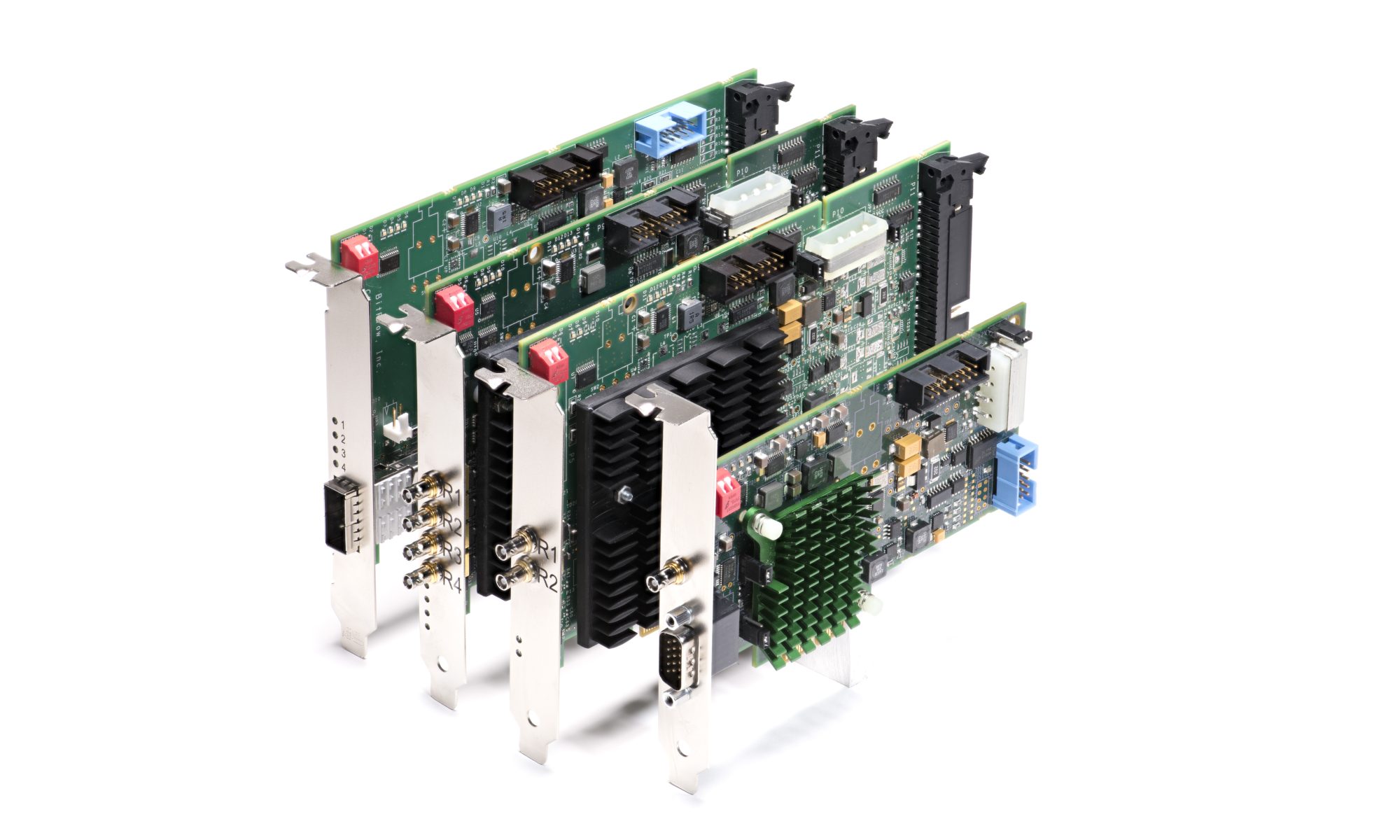
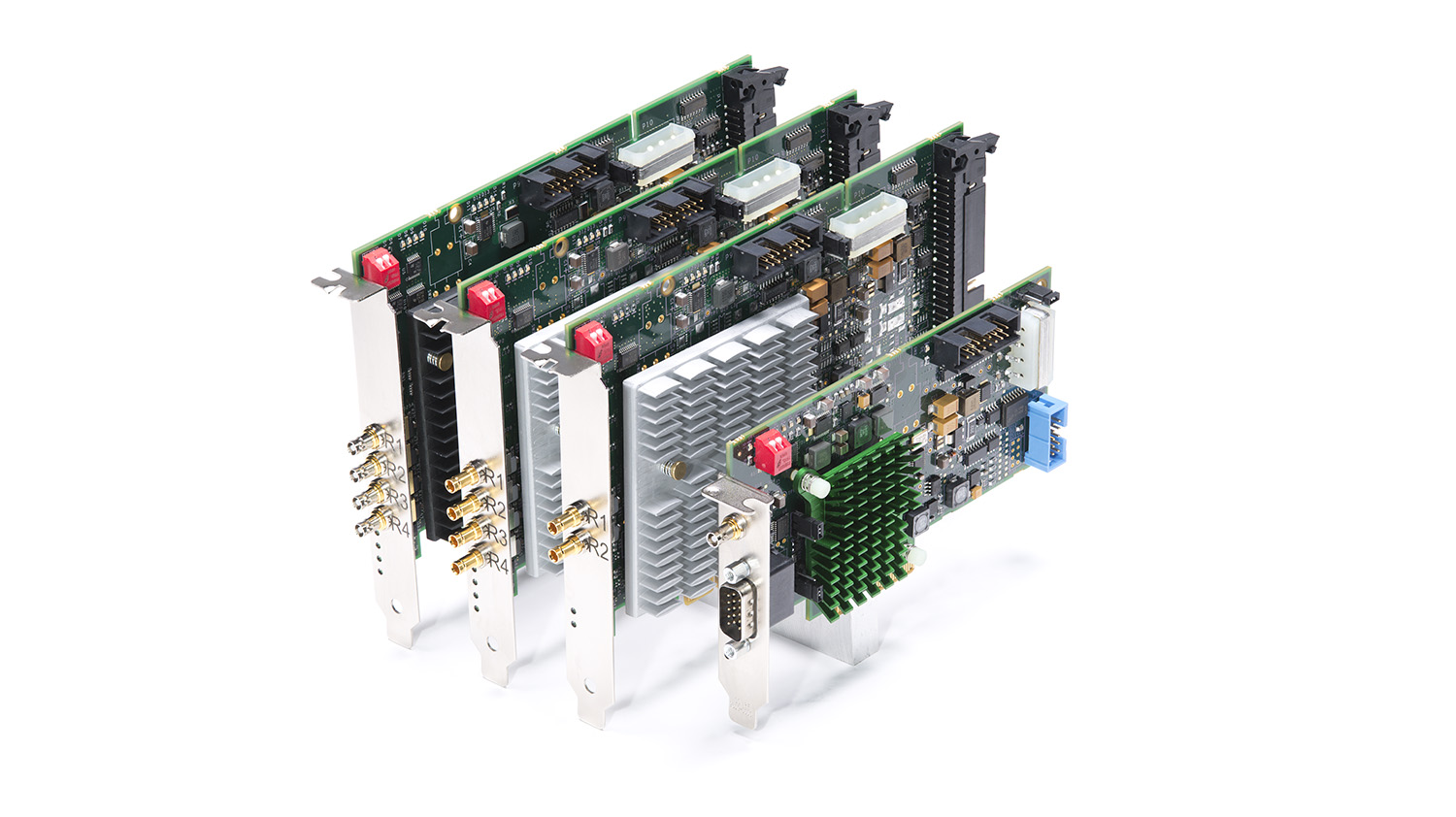
BitFlow, a world leading manufacturer of industrial frame grabbers and a division of Advantech, has announced the full production availability of its Claxon CXP-12 frame grabbers purpose-built for high-speed machine vision systems integrating NVIDIA GPU-accelerated AI inference. The Claxon lineup spans five models — from the single-link Claxon CXP1 and quad-link Claxon CXP4 to the long-reach Claxon Fiber — giving system designers flexible solutions for every deployment scenario.

Artificial intelligence vision pipelines running on NVIDIA GPUs can deliver hundreds to thousands of TOPS in low-precision inference, enabling hundreds of images per second on real-time models like YOLO, with somewhat lower throughput on models like RetinaNet depending on the specific GPU and optimizations. Yet even the fastest GPU will sit idle if image data cannot reach it quickly enough. Standard GigE Vision is limited to ~1 Gbps, while 10 GigE Vision tops out at 10 Gbps. USB3 Vision offers only a fraction of that. CoaXPress 2.0 (CXP-12), by contrast, delivers 12.5 Gbps per link over standard coaxial cable, with link aggregation scaling to 50 Gbps across four links — five times the throughput of 10 GigE Vision and without the variable latency and overhead of Ethernet network stacks.

BitFlow’s Claxon frame grabbers are built on the CXP-12 standard from the ground up. Each board implements the full CoaXPress 2.0 specification, not a subset, which means system designers gain access to every capability the standard offers: simultaneous multi-camera capture, Power Over CoaXPress (13W per link), a 41.6 Mbps low-speed uplink for camera control, and full GenICam support for standardized camera configuration. The result is a deterministic, high-bandwidth data path that feeds GPU memory at the rate modern AI models demand.

“A machine vision system designer can only experience the full potential of CXP 2.0 by having access to all its capabilities,” Donal Waide, Director of Business Development – iService, BitFlow. “With the Claxon family paired to an NVIDIA GPU platform, the image data path finally matches the inference engine’s appetite. There is no artificial ceiling on throughput.”

One Architecture. Every Application.

The BitFlow Claxon family’s half-size, low-profile x8 PCIe Gen 3 form factor slots directly into standard workstations, compact industrial PCs, and NVIDIA GPU platforms. In addition, Advantech offers several AI inference systems and industrial computers that are designed to be compatible with BitFlow frame grabbers, particularly for high-speed machine vision applications. Several Advantech AI inference systems and industrial computers feature NVIDIA GPUs or support NVIDIA GPU expansion for processing.

Engineers selecting a Claxon board choose the channel count that matches their camera configuration, not a board constrained by arbitrary feature cuts:

Claxon CXP1 — Single-link CXP-12 at 12.5 Gbps. The right choice for high-resolution single-camera inspection cells where PCIe slot count is at a premium.

Claxon CXP2 — Dual-link CXP-12 supporting two single-link cameras simultaneously at 12.5 Gbps each, or one dual-link camera at a combined 25 Gbps. Ideal for stereo vision, dual-angle inspection, and 3D reconstruction workloads.

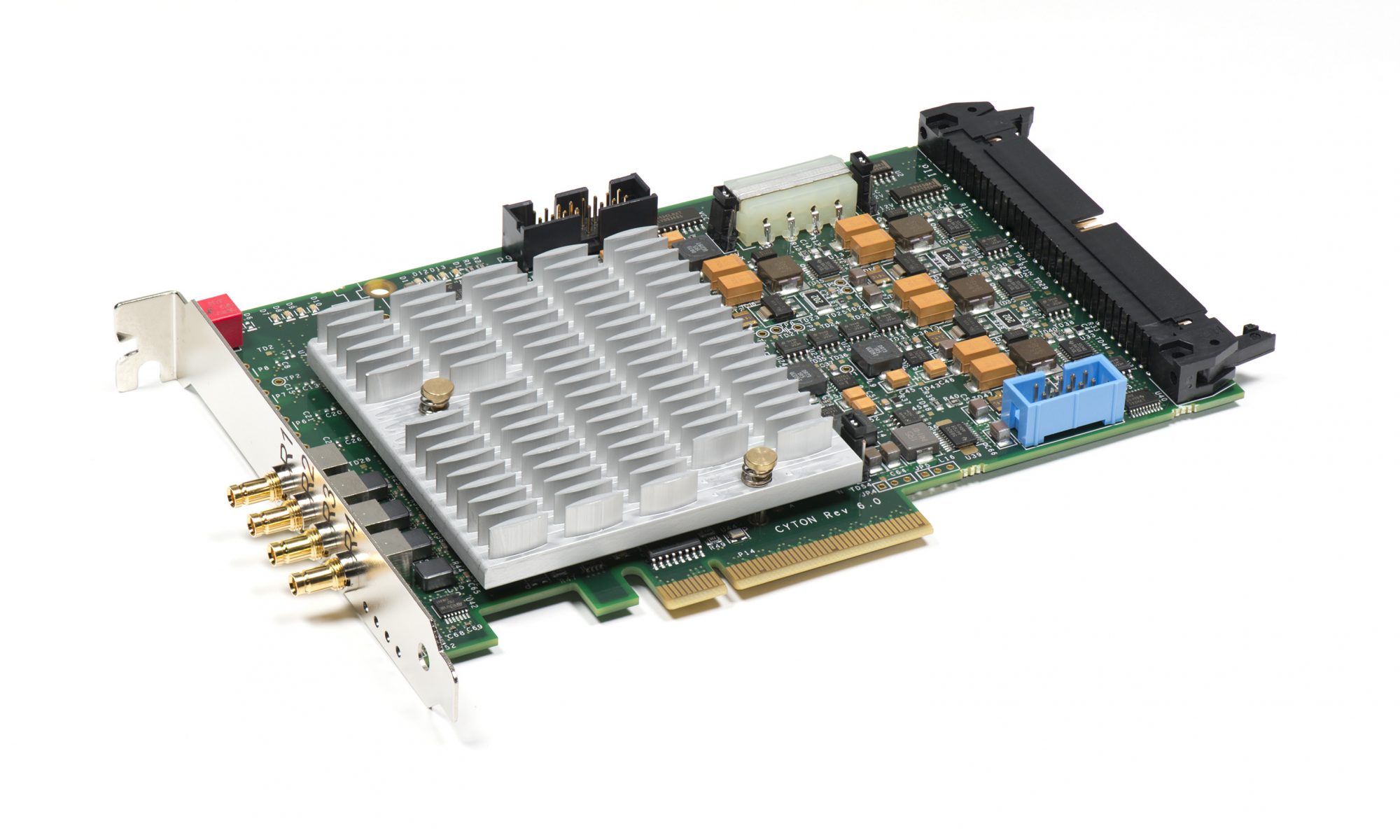
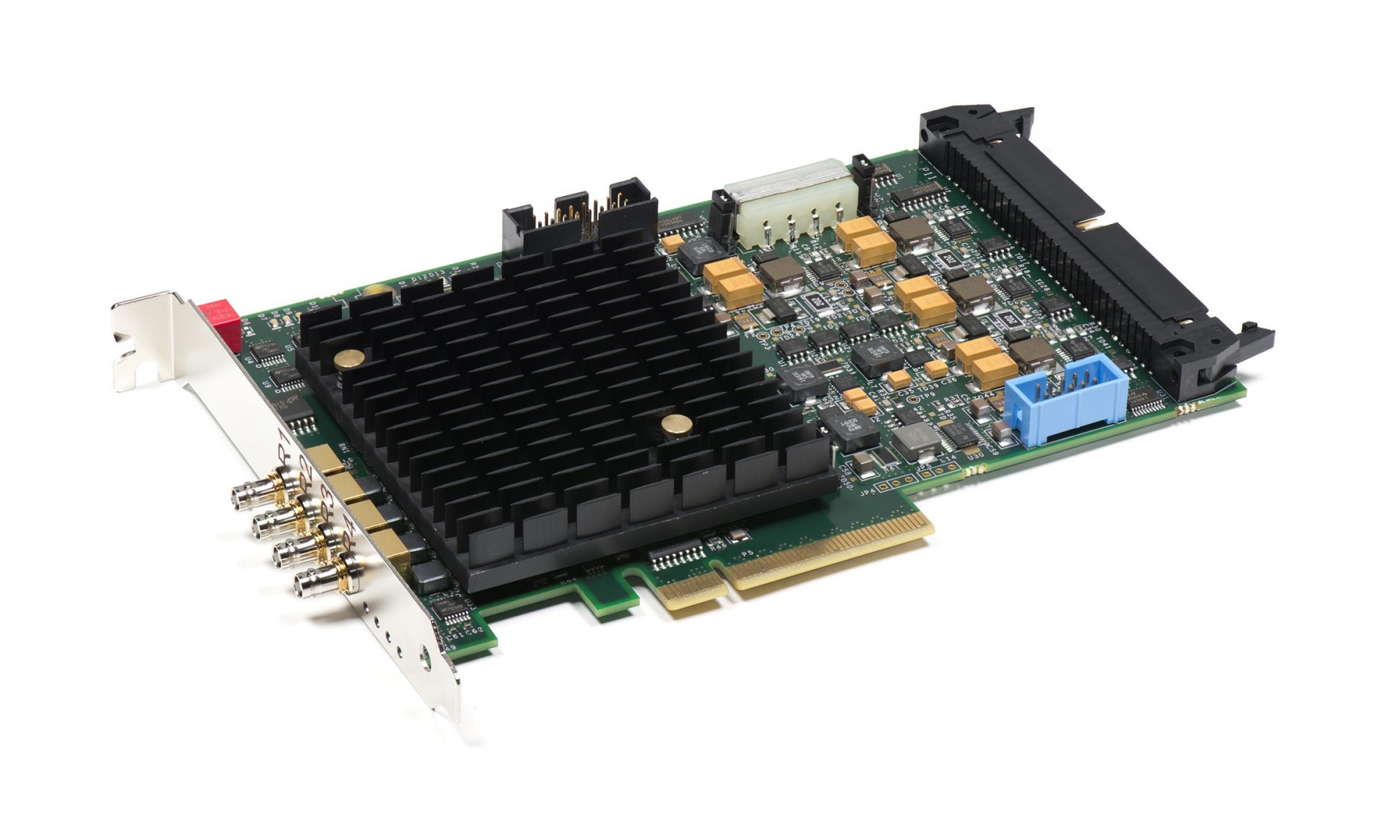
Claxon CXP4 — Quad-link CXP-12 supporting four single-link cameras (12.5 Gbps each), two dual-link cameras (25 Gbps each), or one quad-link camera at 50 Gbps aggregate. With four cables and four CXP-12 cameras active, the maximum data transfer rate reaches 5 GB/s — the highest single-board acquisition rate in the industry. This board is available in two options to accommodate current demand. Both options, while identical in format, make use of an Altera and a Xilinx FPGA design.

Claxon CXP4-V — Architecturally identical to the CXP4 but equipped with active ventilation to manage FPGA thermal output in small-form-factor, fanless industrial computers where natural airflow is insufficient. A field-proven design for embedded AI vision nodes deployed in harsh environments.

Claxon Fiber (CoF) — Extends CoaXPress over QSFP+ fiber cable assemblies, supporting one quad-link, two dual-link, or four single-link CoF cameras at distances exceeding one mile. Fiber is immune to electromagnetic interference, making the Claxon Fiber the preferred choice for vision systems operating near high-voltage equipment, in broadcast facilities, or within large-scale factory floors where coaxial cable runs are impractical.

From Camera to CUDA: Closing the Loop on AI Inference Latency

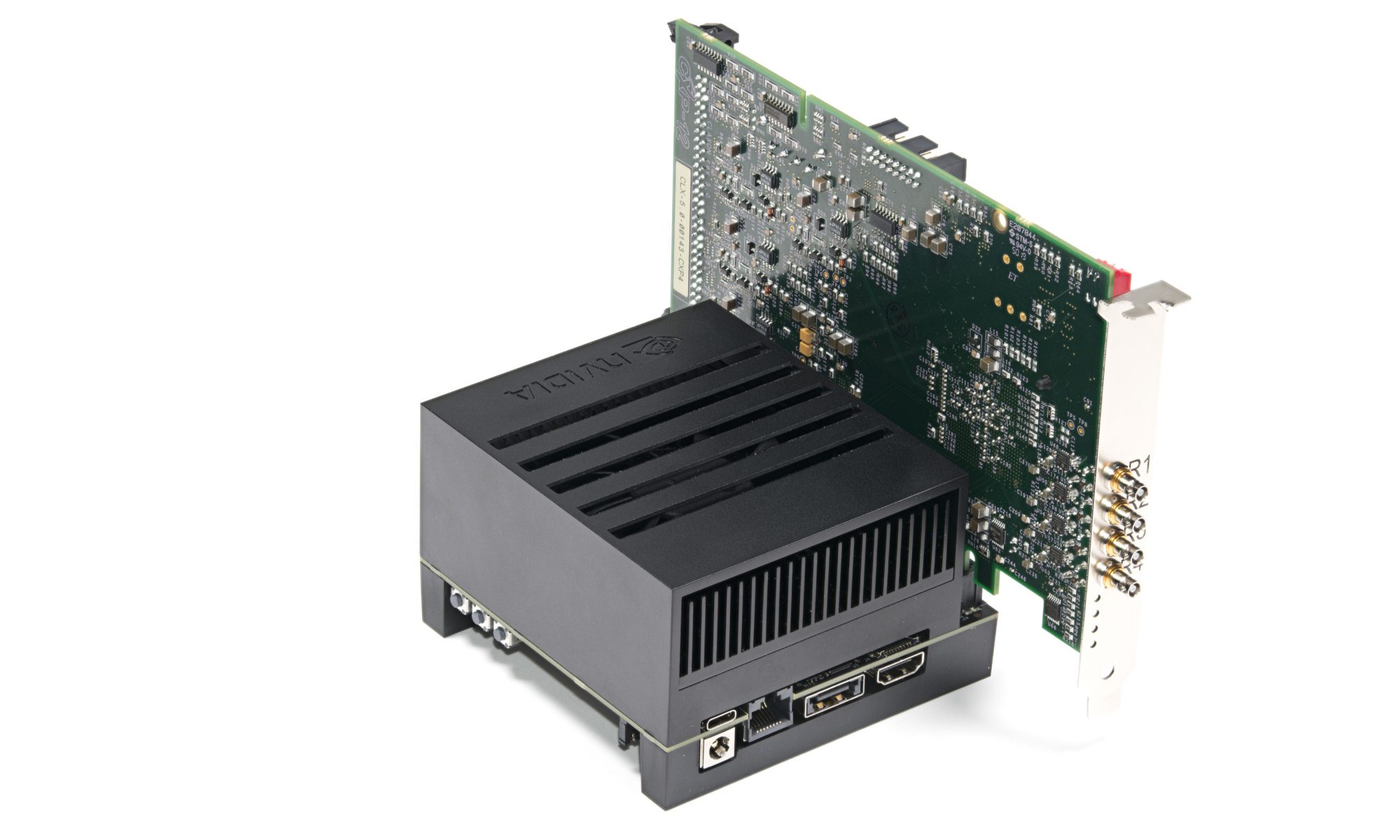
Claxon frame grabbers are engineered to integrate directly with NVIDIA GPU platforms, including systems built on the NVIDIA Jetson AGX Orin. In a validated reference design with Advantech’s MIC-733-AO AI edge computer, the Claxon CXP4 and Claxon Fiber boards connect to an optional PCIe x8 iModule that slots directly into the NVIDIA Jetson carrier, placing frame-accurate image data on the GPU memory bus with minimal CPU intervention. NVIDIA TensorRT inference pipelines then operate on live image buffers without the memory-copy overhead that plagues USB or GigE-based designs.

For data center-class GPU workstations running NVIDIA RTX or Data Center GPU families, the Claxon’s PCIe Gen 3 x8 bus interface feeds image data directly into GPU-accessible system memory via BitFlow’s SDK, which supports buffer management APIs in C, C++, C#, and Python. Computer vision engineers can pipe raw image buffers into CUDA processing kernels, PyTorch data loaders, or TensorRT execution engines with minimal latency added at the acquisition stage.

Software That Doesn’t Make Integration a Second Job

The BitFlow SDK supports both Windows and Linux, covering the breadth of operating environments found in modern AI vision deployments. Drivers are available for leading third-party vision environments including HALCON, LabVIEW, VisionPro, and MATLAB. Full GenICam compliance means any GigE Vision-standard camera configuration tool works with Claxon-connected cameras out of the box. Critically, the Claxon’s architecture is a direct evolution of BitFlow’s prior-generation Cyton CXP platform — users migrating from CXP 1.1 systems can swap in Claxon boards and retain existing software without rewriting acquisition code or reconfiguring triggering logic.

CoaXPress Interface Accelerates Video Streaming in Deep-Tissue Microscopy

BitFlow’s CXP frame grabber transfers image data at 500 frames per second– five times the standard speed

October 17th, 2025 – Within machine vision circles, CoaXPress (CXP) is recognized as the fastest, most reliable interface for transmission of video images from a camera to a host PC. Boasting data transfer speeds up to 12.5 Gigabits (Gbps) per second over a single coaxial cable–along with the necessary power, communication and control–CXP is unmatched in performance or simplicity. CXP’s high speeds and usage of standard coaxial cables has garnered interest outside of the industrial sector in applications as diverse as defense, broadcast, medical imaging and life sciences.

For instance, scientists at the Center for Physical Sciences and Technology (Vilnius, Lithuania) recently developed a new optical microscopy technique leveraging CXP that is a promising alternative to conventional OCT (Optical Coherence Tomography). Their new Dynamic Full-Field Optical Coherence Microscopy (d-FF-OCM) system achieves higher resolution, non-invasive imaging deep within body tissues, a capability that is critical to understanding basic biological processes and advancing clinical diagnoses. Along with a BitFlow CXP frame grabber, the d-FF-OCM system employs an extremely bright, incoherent laser-pumped white light source providing ample intensity to biological samples under inspection.

Light is delivered to the microscope by a multimode fiber and sent to an interferometer composed of a 50/50 beamsplitter and two 100x oil immersion objectives. Additional system components include a transitional stage with stepper motor, a reference mirror mounted on a piezo stack, an NI DAQ card and the microscope.

Data acquisition

Data transfer plays a pivotal role in system performance. Biological image data is captured by an Adimec 2-megapixel CMOS camera that is managed and transferred by a BitFlow Cyton-CXP4 PCIe CoaXPress frame grabber . When all four of the frame grabber’s links were connected to the camera by separate coax cables, the scientists found it possible to transfer data at 25 Gbps with virtually no latency. Driven by the BitFlow CXP frame grabber, the system acquires 1440 × 1440 resolution images at 500 frames-per-second (fps) with a field-of-view of 173 µm × 173 µm, instead of the typical 100 fps in similar scanning systems. This allows frequency analysis to be extended from the standard 30-50Hz to 250Hz.

Faster dynamic processes resulted in the generation of fluorescence-like contrasted d-FF-OCM images that better separated structures within the biological samples for analysis. Once sent to the PC, data was analyzed in a customized LabVIEW application in real time. Each pixel is colored according to its relative spectral content and stacked into layers to create an RGB image. Tests on ex vivo mouse tissue, including liver and small intestines, demonstrated deep tissue high-resolution imaging free from coherent artifacts. The superior results underscore the value of the CXP interface in achieving extremely fast transfer rates from camera to PC.

The scientists believe that the d-FF-OCM system is poised to play a growing role in advancing personalized medicine, enabling earlier and more precise diagnostics and facilitating a deeper understanding of disease mechanisms.

BitFlow Fiber-over-CoaXPress Frame Grabber Integrated with NVIDIA TensorRT in Real-time Human Pose Estimation

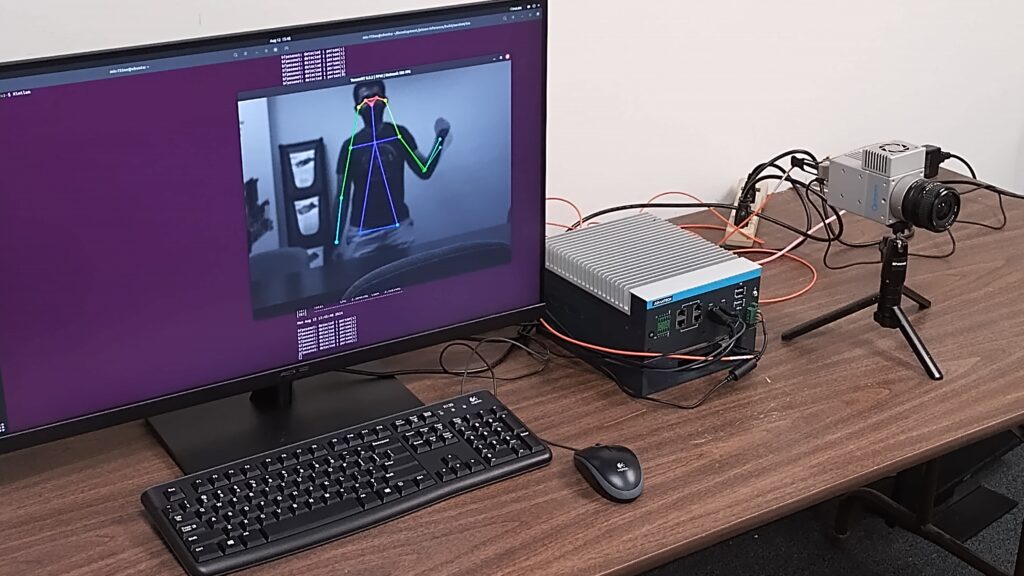
WOBURN, MA, JANUARY 8, 2025 — In collaboration with its parent company, Advantech, BitFlow announced today that it has successfully integrated its Claxon Fiber-over-CoaXPress (CoF) frame grabber with an Advantech AI Inference edge computer and Optronis Cyclone Fiber 5M camera in developing a real-time human pose estimation project accelerated by NVIDIA TensorRT deep learning.

One of the most advanced of its kind, the pose estimation system can provide low latency analysis of athletic movement, gaming, physical therapy, AR/VR, fall detection, and online coaching. Traditional approaches to pose estimation required multiple cameras and special suits with markers, rendering it impractical for most applications. AI-driven computer vision has elevated this field where a single camera can now capture professional-grade, real-time pose estimation. 

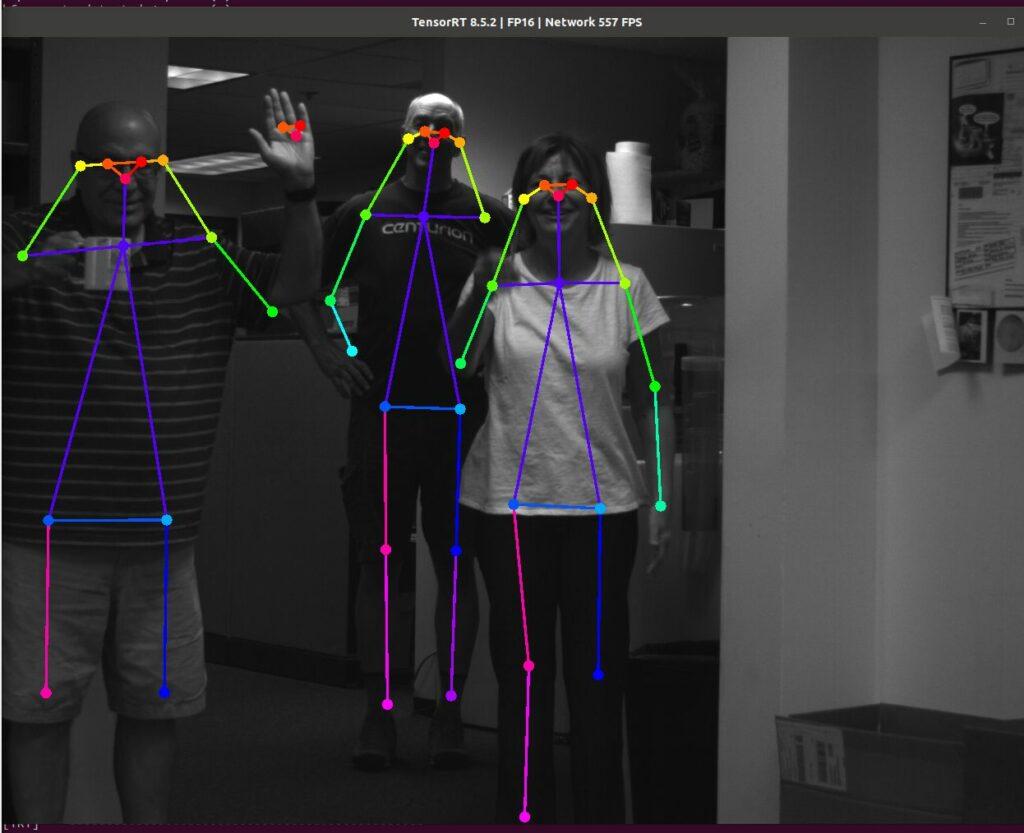
With a processing time of less than 2 milliseconds, the system is capable of acquiring 2560 x 1916 resolution images at 600 frames-per-second. Once output to the BitFlow Claxon CoF frame grabber, the Claxon’s Direct Memory Access transmits images directly into the Advantech computer’s GPU memory, reducing bottlenecks and freeing up the CPU to apply an NVIDIA pre-trained algorithm that searches each frame for people. If the algorithm locates a person, it calculates a crude skeleton location and overlays the displayed image with a “stick figure” representing the person’s bone structure.

The Advantech MIC-733-AO AI edge computer is embedded with an NVIDIA Jetson AGX Orin that natively supports the NVIDIA TensorRT ecosystem of APIs for deep learning inference. An optional PCIe x8 iModule is available for the MIC-733-AO to accommodate BitFlow CoaXPress and Camera Link frame grabbers. 

High throughput demands of the system required the use of the BitFlow Claxon CoF model. Designed to extend the benefits of CoaXPress over fiber optic cables, the Claxon Cof is a quad CXP-12 PCIe Gen 3 frame grabber that supports all QFSP+ compatible fiber cable assemblies. In addition to high speeds, fiber cables are immune to EMI and is capable of running lengths well over a kilometer, further than Ethernet’s 100 meter limitations.

Human pose estimation image
Real-time human pose system incorporating BitFlow CoF frame grabber, Advantech AI edge computer, and Optronis fiber camera, accelerated by NVIDIA TensorRT deep learning

BitFlow Frame Grabbers Enable Researchers to Leverage CoaXPress into Experimental 3D Profilometry Imaging Technique

Profilometry is an imaging technique used to extract topographical data from a surface in order to obtain surface morphology, step heights and surface roughness. Dynamic 3D surface imaging by phase-shifting fringe projection profilometry (PSFPP) has been widely implemented in diverse applications, including industrial manufacturing, archaeological inspection, entertainment, and biomedicine. PSFPP works by first projecting sets of phase-shifting sinusoidal fringe patterns onto 3D objects and then analyzing deformed structure images reflected from the objects to retrieve 3D surface information.

Existing PSFPP techniques have fallen short in simultaneously providing the robustness in solving spatially isolated 3D objects, the tolerance of large variation in surface reflectance, and the flexibility of tunable working distances with meter-square-level fields of view at video rate. To overcome these limitations, researchers at the INRS Énergie Matériaux Télécommunications Research Centre in Quebec, Canada developed a technique they termed Multi-Scale Band-Limited Illumination Profilometry or MS-BLIP. Supported by the synergy of dual-level intensity projection, multi-frequency fringe projection, and an iterative method for distortion compensation, MS-BLIP can accurately discern spatially separated 3D objects with highly varying reflectance.

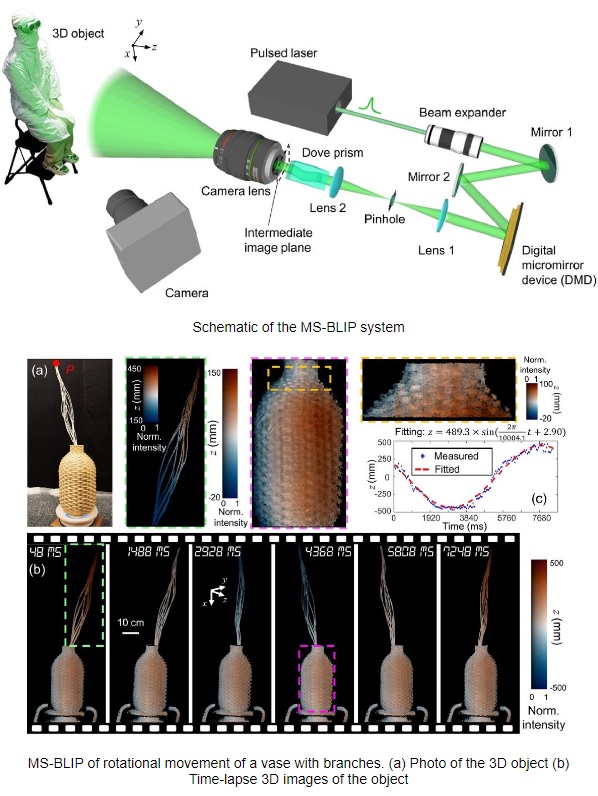
The MS-BLIP system begins with a pulsed laser used as the light source. After expansion and collimation, the beam is directed to a 0.45” DMD (Digital Micromirror Device) at an incident angle of ∼24° to its surface normal. Binary fringe masks, generated by an error diffusion algorithm from their corresponding grayscale patterns, are loaded onto the DMD and displayed at up to 1 kHz. A band-limited 4f imaging system that consists of two lenses and one pinhole converts these binary patterns to grayscale fringes at the intermediate image plane. The smallest period in the used sinusoidal fringe patterns is 388.8 µm, which demands a 150-µm-diameter pinhole to pass the spatial frequency components of these patterns while filtering all noise induced by the digital half-toning. A dove prism rotates the generated fringe patterns to match the aspect ratio of the targeted scene. Then, a camera lens (AF-P DX NIKKOR 10-20mm f/4.5-5.6G VR, Nikon) projects these fringe patterns onto 3D objects. The deformed structure images are captured by an Optronis CP70-1HS-M-1900 CoaXPress camera with an Azure lens. Synchronized by the DMD’s trigger signal, the acquired images are transferred to a computer via a cable to a BitFlow Cyton-CXP CoaXPress frame grabber built on a half-size x8 PCI Gen 3.0 express board compliant with the CXP 1.1 standard.

CoaXPress (CXP) is an asymmetric high-speed point-to-point serial communication standard for the transmission of video and still images, scalable over single or multiple coaxial cables. It has a high speed downlink of up to 12.5 Gbps per cable for video, images and data, plus a lower speed uplink up to 42 Mbps for communications and control. Power is also available over the cable (“Power-over-Coax”) and cable lengths of greater than 100m may be achieved.

“Applications for CoaXPress are evolving with new use cases being found in precise medical research and 3D inspection where Camera Link or GigE Vision previously were the go-to standard,” said Donal Waide, Director of Sales for BitFlow, Inc. “Speed combined with stability, plus a growing choice of compatible cameras, have sparked a great deal of interest for CoaXPress in laboratory settings.”

To demonstrate MS-BLIP’s potential in industrial inspection, researchers imaged the rotational movement of a bamboo vase with extending branches rotating at 0.6 rad/s. MS-BLIP was operated at a working distance of 2 meters (m), with an FOV of 1.5 m × 1.0 m, and at a 3D imaging speed of 20.8 frames-per-second (fps). Under these working conditions, the depth resolution was quantified to be 3.7 mm, and the lateral resolution was measured to be 1.7 mm. Close-up views of the vase presented detailed structural information on its surface with depth-encoded color changes of the branches reflecting the rotation movement of the object.

Along with testing with the rotational movements of a craft vase, MS-BLIP also proved successful in the dynamic 3D visualization of translational movements of an engineered box, and full human body movements at a measurement volume 3X greater than existing BLIP systems. Future work will be carried out to improve MS-BLIP’s imaging speed by adopting multiple cameras, a faster DMD, and a more powerful light source. Besides technical improvement, the researchers will continue to explore new applications including automated industrial inspection human-computer interaction.

High-speed dual-view band-limited illumination profilometry using temporally interlaced acquisition C Jiang, P Kilcullen, Y Lai, T Ozaki, J Liang Photonics Research 8 (11), 1808-1817, May 2022

BitFlow Debuts Fan-Cooled CoaXPress Frame Grabbers to Protect Industrial Mini-Computers

BitFlow Claxon and Cyton CXP frame grabbers engineered for the challenges of embedded computing where airflow cannot dissipate FPGA heat

WOBURN, MA, APRIL 28, 2021 — Configured with a powerful processor, ample storage, and an operating system, Small Form Factor (SFF PC) computers are becoming an essential part of the Industry 4.0 landscape, but present challenges in space-constrained embedded vision applications.

To save space, SFF PCs are typically fanless making them susceptible to overheating if airflow isn’t sufficient to dissipate heat from FPGA (Field Programmable Gate Array) processors that are often required to tackle demanding and intelligent vision tasks. The dense congestion of components within the SFF PC restricts airflow and space, which makes the use of many conventional cooling devices difficult to cool an FPGA.

To address thermal management challenges, BitFlow has engineered two new purpose-built frame grabbers featuring board-mounted micro fans to draw in cool air to replace hot air in the SFF PC. This dedicated design helps increase heat transfer from the FPGA while reducing the overall system size, and ensuring more reliable computing performance and preventing costly downtime.

Newly redesigned BitFlow Cyton CXP4-V and Claxon CXP4-V quad-channel frame grabbers were developed using the legacy architecture of their fan-less counterparts, so integrators can have complete confidence when selecting either of these field-proven designs for their vision systems. The Claxon CXP4 frame grabber is a quad CXP-12 PCIe Gen 3 frame grabber that supports one to four CXP-12 cameras and multi-link CXP-12 cameras, with CXP speeds from 3.25 to 12.5 Gb/S. Each connected camera has its own I/O and can draw up to 13 W of power. The Cyton CXP4 frame grabber is based on the CoaXPress 1.1 standard and has a Gen 2.0 x8 PCI Express bus interface on its back-end for high-speed access to host memory in multi-camera systems. Both frame grabbers support simple triggering modes and complicated, application-specific triggering and control interactions within any hardware environment.

“Although a small form factor PC consumes less power and produces less heat than its larger brethren, manufacturers are increasing the power of their microprocessors, putting more units per rack, and filling up the racks as much as possible, making overheating a serious issue,” said Donal Waide, Director of Sales for BitFlow. “With a lot of these small form factor PC’s the manufacturer is choosing to go fanless where possible but the powerful FPGA generates more heat than the heat syncs can dissipate quickly. Our new Cyton and Claxon CXP frame grabbers deliver extremely fast data transfer plus offer the added value of cooling protection for our customers’ computing investments.”

BitFlow Turbo-Charges Single Link Frame Grabber with Latest CoaXPress Standard

Claxon CXP1 designed for new generation of single link CXP-12 cameras

WOBURN, MA, SEPTEMBER 18, 2020 – BitFlow has expanded its Claxon™ series of high-performance CoaXPress CXP-12 frame grabbers with a new single link version that transfers image data from a CXP camera to the host memory at speeds up to 12.5 Gb/S, or twice the acquisition bandwidth of the previous generation of the CoaXPress standard. The BitFlow Claxon CXP1 provides developers of smaller-scale, yet complex vision systems with a deterministic, zero-latency pipeline ideal for applications that include aerospace, AOI, science and robotics, as well as high-speed linescan inspection of printed materials or textiles.

Like the Claxon CXP4 quad link model from BitFlow, the new frame grabber takes full advantage of a half-size PCI Express expansion bus and StreamSync™ DMA to deliver the sustained bandwidth needed to support acquisition from one of the new generation single-link CXP-12 cameras. Cameras are “plug-and-play” with automatic link speed and camera parameter detection.

In addition to transmitting bitrates up to 12.5 Gb/S, the Claxon CXP1 has an uplink interface of up to 41.6 Mbps, and further simplifies integration by supplying 13 watts of Safe Power through PoCXP — all on a single Coaxial cable using reliable micro-BNC (HD-BNC) connectors. Unlike USB3, Camera Link or other interfaces that rely on passive cable lengths of a few meters or less, the Claxon CXP1 frame grabber supports a 40-meter maximum cable length without the use of a repeater that could jeopardize signal integrity. Fanless passive cooling ensures extended use of the frame grabber without maintenance.

Claxon CXP1 frame grabbers are supported by BitFlow’s software development kit (SDK) to help developers in the configuration of vision systems. The SDK contains fully developed applications, and a variety of utilities and libraries, and supports both 32-bit and 64-bit Windows and Linux. Drivers for third party applications are also available, such as LabView, VisionPro and HALCON.

New Whitepaper to Help Machine Vision Designers Control CoaXPress Cameras for Greater Flexibility and Lower Costs

Claxon CXP4

WOBURN, MA, JUNE 23, 2020 – The challenges facing today’s machine vision integrators are more complicated and critical than ever before, as they strive to build faster, more accurate and cost-efficient systems in the wake of changing technology. To that end, BitFlow has published a new whitepaper Controlling CoaXPress Cameras from The BitFlow SDK Tools, Configuration File and APIs designed to help integrators new to the CoaXPress (CXP) standard introduce advanced CXP cameras into system infrastructure to shape positive outcomes.

CoaXPress is the world’s fastest standard for professional and industrial imaging applications such as machine vision, medical imaging, life sciences, broadcast and defense. It is an asymmetric point-to-point serial communication standard that transmits video and still images, scalable over single or multiple coaxial cables. It has a high speed downlink of up to 12.5 Gbps per cable for video, images and data, plus a lower speed uplink up to 42 Mbps for communications and control.

An invaluable learning tool, the 10-page whitepaper details the flexible CXP tools available in the BitFlow SDK (Software Development Kit), and how they work in concert to meet different application needs. It also provides examples showing optimization of a CXP machine vision system, accelerated and simplified by the BitFlow SDK.

The publication of the new whitepaper is part of the rollout of the new BitFlow Claxon CXP-12 PCIe Gen 3 frame grabber. CXP-12 is the latest CoaXPress speed jump, now transmitting video at 12. 5 Gb/S.

Get your copy here.

BitFlow Introduces SDK for NVIDIA Jetson AGX Xavier Development Kit

Jetson with a Claxon

BitFlow has released a Linux AArch64 (64-bit ARM) SDK that enables seamless integration of BitFlow frame grabbers with the NVIDIA Jetson AGX Xavier Development Kit. 

Donal Waide, Director of Sales for BitFlow, states, “Many of our customers are already using GPU solutions such as NVIDIA for image processing so adding this option to the already large BitFlow suite of adapters was a natural progression for the company. BitFlow has been supporting Linux for several years across a variety of flavors.”

Added Waide, “BitFlow was one of the first frame grabber companies to support NVIDIA’s GPUDirect for Video technology. BitFlow and NVIDIA have worked together for a number of years already.” 

With the advent of the new machine vision standard CXP 2.0 where data rates are now up to 50 Gb/S, customers are looking to process more and more data and in shorter timeframes. For this, a GPU can typically perform these tasks much more effectively than a CPU. Even with slower data rates such as Camera Link’s (up to 850 MB/S) the ability to quickly process more complex algorithms is equally important. 

The NVIDIA Jetson AGX Xavier is the first computer designed specifically for autonomous machines. It has six Engines onboard for accelerated sensors data processing and running autonomous machines software, and offers the performance and power efficiency for fully autonomous machines.

FLIR Recommends BitFlow Cyton CXP-4 CoaXPress Frame Grabber for ResearchIR Software

BitFlow received an important endorsement of its CoaXPress™ frame grabbers from FLIR®, the world leader in the design, manufacture, and marketing of thermal imaging infrared cameras. FLIR has recommended the BitFlow Cyton CXP-4 CoaXPress™ as a preferred frame grabber for FLIR ResearchIR™ software, a powerful and easy to-use thermal analysis software package for FLIR Research & Development / Science cameras.

While ResearchIR software is compatible with a variety of PCI Express (PCIe) frame grabbers, FLIR highlighted the Cyton CXP-4 as being an optimal way to maximize its performance. ResearchIR software connects directly to FLIR cameras via a frame grabber to acquire thermal snapshots or movie files, or to customize recording options including start times, end times, and the number of frames to acquire. In addition to ResearchIR, FLIR recommends the Cyton CXP-4 for its Research Studio software and its BHP SDK (Software Development Kit) which is used to write custom GUIs.

In a technical note, FLIR explained that standard CoaXPress frame grabbers may be difficult to get up and running with its BHP SDK. However, it pointed out that when the Bitflow Cyton CXP-4 is resident in a workstation where ResearchIR has been loaded, both the driver and camera configuration files will already be installed, saving the integrator considerable time wasted downloading drivers and additional supporting software.

The BitFlow Cyton CXP4 four-channel frame grabber is based on the CoaXPress standard. It incorporates the Gen 2.0 x8 PCI Express bus interface on its back end, doubling the data rate of the Gen 1.0 bus for high-speed access to host memory in multicamera systems, while using the same compact footprint and connectors. By supporting the CoaXPress standard on its front end, the board facilitates video capture speeds of up to 6.25 Gb/s in applications deploying one to four CXP-6 cameras. It also allows control commands, triggers and power to be sent to and from cameras over the same 75 Ohm coaxial cable.

BitFlow in San Jose, California 2019

BitFlow will be exhibiting at the CRAV conference at the DoubleTree by Hilton San Jose from Tuesday November 12th through Wednesday November 13th.  Come stop by tabletop #63 to see our latest offerings.