Five Trends Set to Define Machine Vision Heading Into 2027

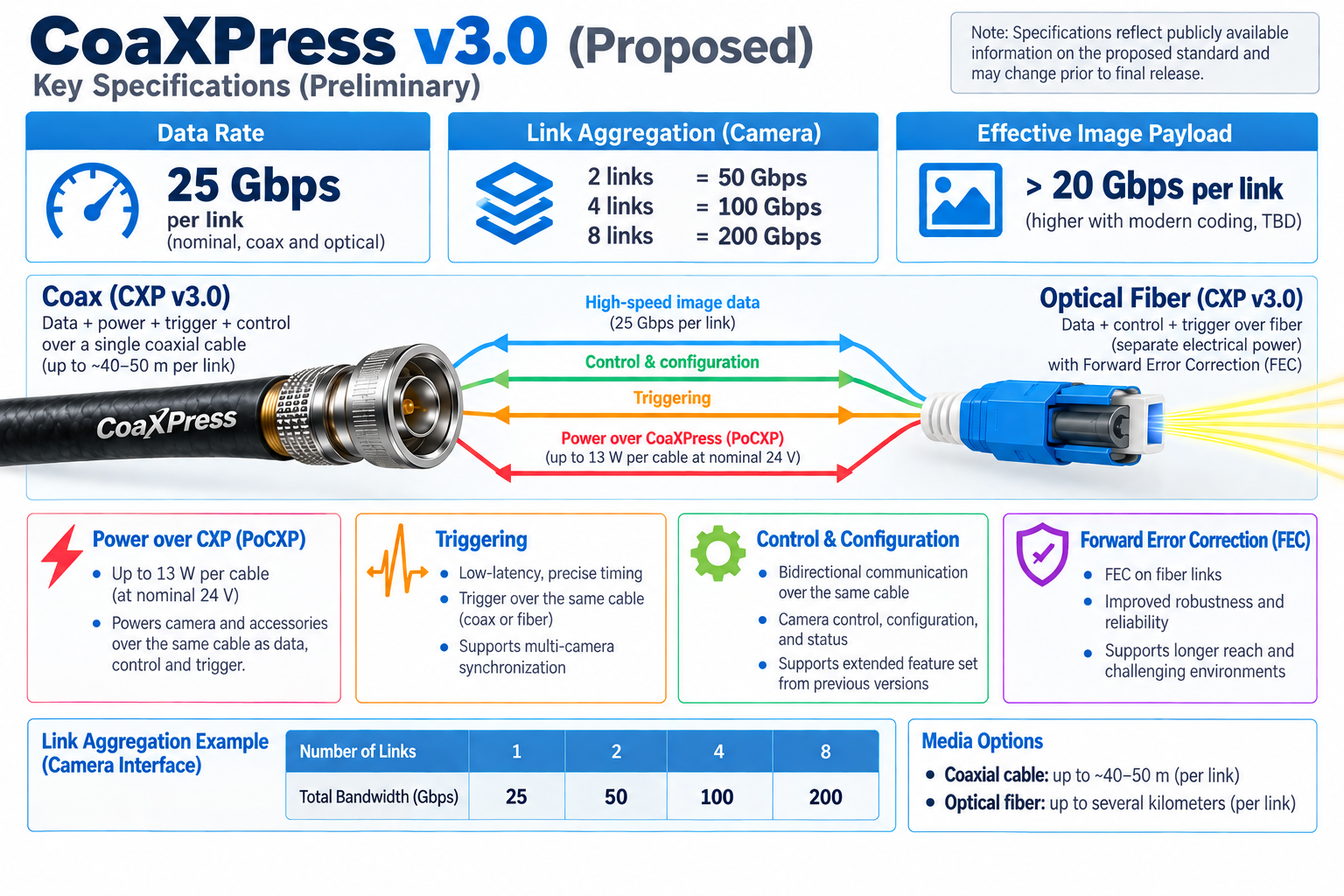
CoaXPress v3.0 preliminary

WOBURN, MA, SEPTEMBER 16, 2026 — BitFlow, Inc., a business unit of Advantech and a premier manufacturer of high-performance frame grabbers, today outlined five trends set to shape machine vision as the industry moves into 2027. The company also detailed how its flagship CoaXPress (CXP) and Camera Link solutions are positioned to power the next generation of AI-optimized inspection systems. These systems span critical sectors including semiconductors, EV battery manufacturing, automotive, pharmaceuticals, and food processing.

The outlook follows a milestone year for the company: the full production release of BitFlow’s Claxon CXP-12 lineup — five models spanning the single-link Claxon CXP1 through the quad-link Claxon CXP4 and long-reach Claxon Fiber — purpose-built to feed NVIDIA GPU-accelerated inference pipelines at full CoaXPress 2.0 throughput. With that foundation now in full deployment, BitFlow is turning its attention to the next wave of standards and workloads set to arrive in 2027.

“We’re watching a fundamental shift in how manufacturers approach quality control, and it’s only accelerating as we head into next year,” said Donal Waide, Director of Business Development, iSystems, Advantech. “Traditional rule-based vision cannot deliver the defects-per-million rates modern production demands. BitFlow frame grabbers provide the zero-latency, zero-frame-loss image acquisition infrastructure that will make Industrial Vision AI the operating standard in 2027.”

Here are the five trends

1. Industrial Vision AI Becomes the New Quality Standard

As manufacturers push toward near-zero defect rates going into 2027, deep learning and adaptive AI models are set to replace conventional inspection methods at scale. BitFlow’s ultra-reliable, high-bandwidth architecture feeds massive multi-camera, high-resolution image streams directly to AI accelerators without bottlenecks. This is a critical capability for automated optical inspection (AOI) in electronics and precision manufacturing. Advantech Vision AI deployments already show real-time defect detection meeting the world’s strictest quality standards in 2026, and adoption is on track to accelerate further next year.

2. CoaXPress v3.0 Arrives to Reset the Performance Bar

CoaXPress 2.0 remains today’s performance leader, delivering up to 12.5 Gbps per link (CXP-12) with power, triggering, and control over a single coaxial cable. Link aggregation scales to 50 Gbps across four links and beyond. BitFlow offers one of the industry’s most comprehensive CXP-12 portfolios, from compact low-profile designs to multi-link systems supporting aggregate bandwidths exceeding 100 Gbps.

But the headline for 2027 is CoaXPress v3.0. The CoaXPress technical committee has been finalizing the new specification since late 2025, with release still expected before year-end 2026 though an official date has not yet been announced. The headline numbers are already locked in: a nominal 25 Gbps per link (CXP-25), full integration of CoaXPress over Fiber into the core standard rather than an add-on, an expanded uplink for faster triggering, and support for forward error correction. That means systems designed today should be built with a clear runway to next-generation speeds, not a forklift upgrade next year.

BitFlow is already there: its Claxon Fiber series and QFi copper-to-fiber converter use QSFP+ transceivers to deliver long-distance transmission over hundreds of meters and complete EMI immunity today, on an architecture built to carry forward into v3.0 fiber-native deployments.

“We’re already positioning products to support next-generation CoaXPress v3.0 speeds and fiber-native architectures,” Waide noted. “Customers building on our platform now will be ready the day v3.0 hardware ships in 2027.”

3. Edge AI Demands Sub-5 Microsecond Latency

In high-speed production lines, latency directly impacts throughput. BitFlow’s edge-native architecture eliminates bottlenecks through:

· Direct GPU transfers (GPUDirect RDMA for NVIDIA, DirectGMA for AMD) bypassing the CPU for sub-5 µs host-to-GPU latency

· FPGA-based pre-processing pipelines executing debayering, flat-field correction, LUTs, and ROI extraction at full pixel clock rates

· Up to 128 independent DMA streams for complex multi-camera and region-of-interest configurations

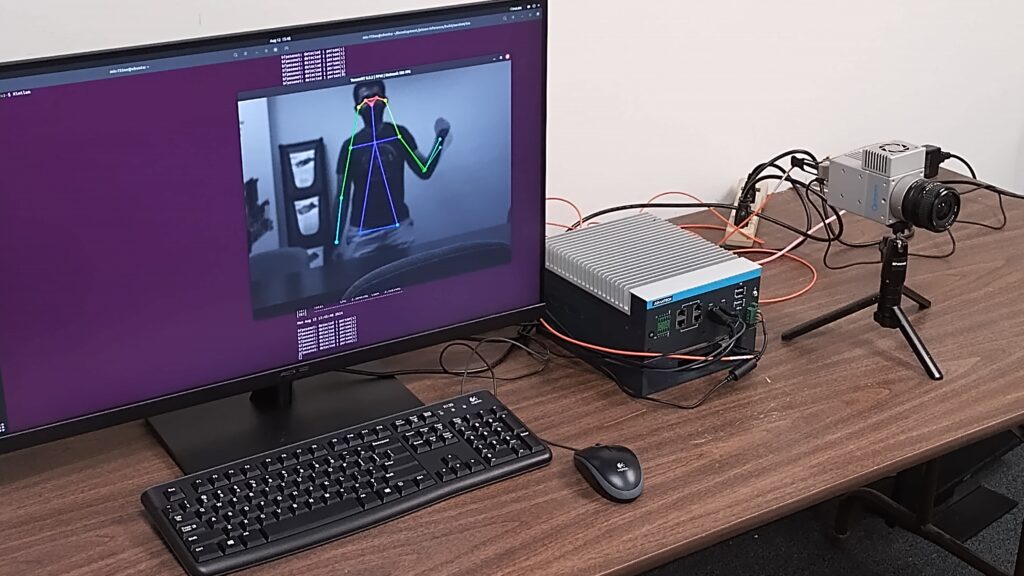
This deterministic, high-speed acquisition lets AI models focus purely on inference. This capability is driving explosive growth in inline EV battery inspection and high-speed sorting applications, and one BitFlow has already demonstrated in production: its Claxon Fiber-over-CoaXPress frame grabber has been integrated with an Advantech AI inference edge computer and NVIDIA TensorRT for real-time pose-estimation workloads, underscoring the same low-latency pipeline now being applied to industrial inspection.

4. 3D Vision and Robotics Integration Accelerates

Demand for precision 3D inspection using stereo vision, time-of-flight, and laser triangulation is surging in battery electrode metrology, robotic bin-picking, and assembly verification. It is projected to intensify further in 2027. BitFlow’s high-bandwidth CXP interfaces deliver synchronized multi-view data flows essential for 3D reconstruction and AI pose-estimation algorithms. This directly supports the collaborative robot (cobot) and autonomous mobile robot (AMR) boom, where real-time object recognition and human-robot collaboration require rock-solid image pipelines for Industry 5.0-style manufacturing.

5. Extreme Resolution Meets Deterministic Performance

As cameras push toward higher resolutions, faster frame rates, and event-based sensors, BitFlow’s latest solutions, including the QFi for remote CXP deployments, are built to handle extreme specifications without compromise heading into 2027, supporting long cable runs, precision encoder-based triggering, and error-free transmission in harsh industrial environments.

The BitFlow-Advantech Advantage

“As part of Advantech, we deliver complete end-to-end solutions: world-class frame grabbers integrated with powerful edge servers, AI software stacks, and modular architectures,” Waide stated. “Since 1993, BitFlow’s focus has remained constant: providing deterministic, high-throughput image acquisition that makes advanced vision possible.”

Whether manufacturers are scaling Vision AI for defect-free production, transitioning to fiber for extended reach, or powering autonomous inspection systems, BitFlow frame grabbers deliver reliable performance, every frame, every time.

“As companies become more familiar with the advantages of AI based systems, it’s always good to know that Advantech is an Elite partner of NVIDIA and have been planning this technology breakthrough for some time now. “When the customer is ready, we will be waiting, ” cites Waide.
AI-Driven Machine Vision Systems with NVIDIA GPU Performance

CXP Family

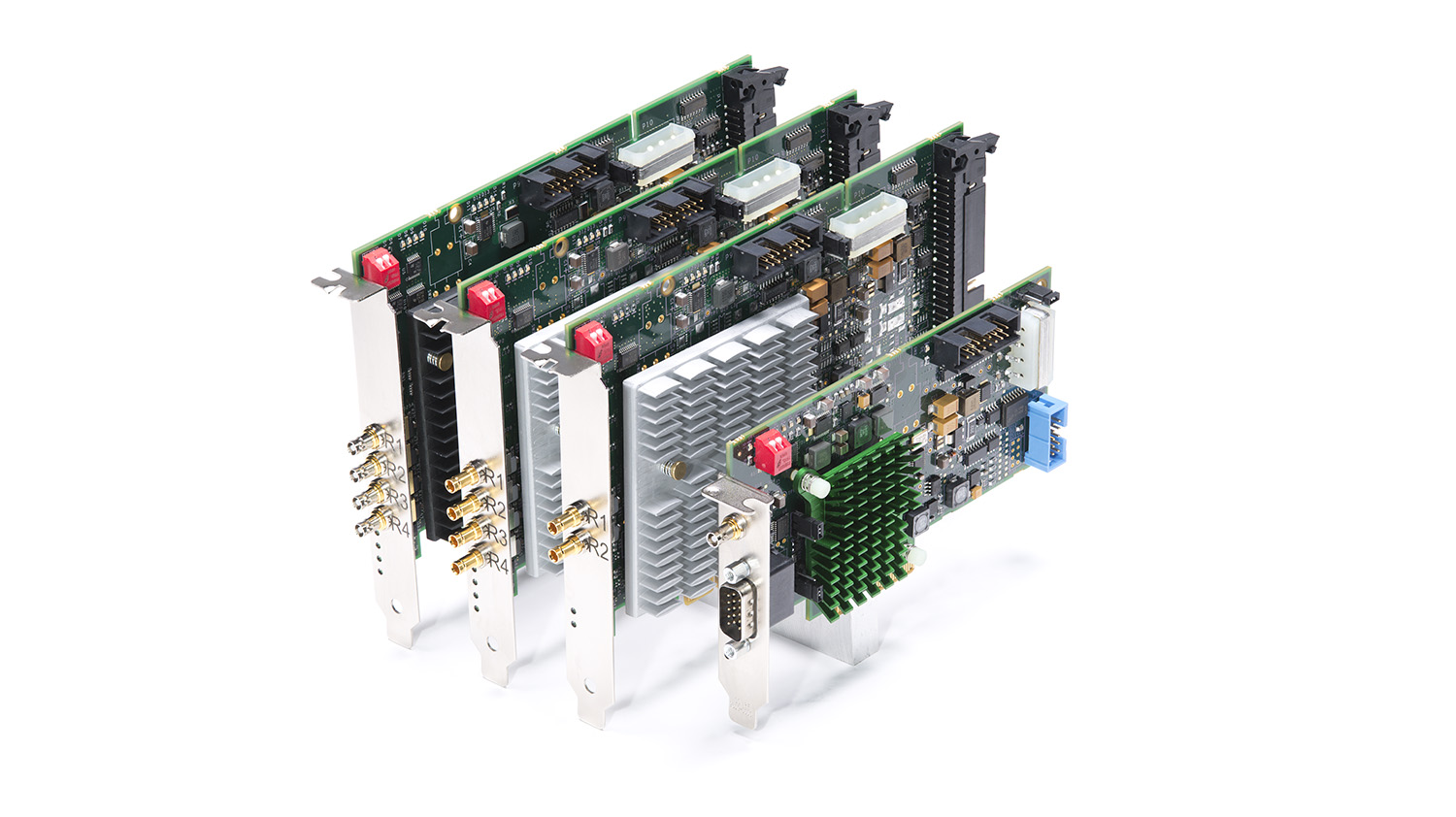
BitFlow Claxon Frame Grabbers accelerate AI-Driven machine vision systems with NVIDIA GPU performance. Full CoaXPress 2.0 throughput and direct GPU integration put real-time AI Inference within reach of vision engineers.

BitFlow, a world leading manufacturer of industrial frame grabbers and a division of Advantech, has announced the full production availability of its Claxon CXP-12 frame grabbers purpose-built for high-speed machine vision systems integrating NVIDIA GPU-accelerated AI inference. The Claxon lineup spans five models — from the single-link Claxon CXP1 and quad-link Claxon CXP4 to the long-reach Claxon Fiber — giving system designers flexible solutions for every deployment scenario.

Artificial intelligence vision pipelines running on NVIDIA GPUs can deliver hundreds to thousands of TOPS in low-precision inference, enabling hundreds of images per second on real-time models like YOLO, with somewhat lower throughput on models like RetinaNet depending on the specific GPU and optimizations. Yet even the fastest GPU will sit idle if image data cannot reach it quickly enough. Standard GigE Vision is limited to ~1 Gbps, while 10 GigE Vision tops out at 10 Gbps. USB3 Vision offers only a fraction of that. CoaXPress 2.0 (CXP-12), by contrast, delivers 12.5 Gbps per link over standard coaxial cable, with link aggregation scaling to 50 Gbps across four links — five times the throughput of 10 GigE Vision and without the variable latency and overhead of Ethernet network stacks.

BitFlow’s Claxon frame grabbers are built on the CXP-12 standard from the ground up. Each board implements the full CoaXPress 2.0 specification, not a subset, which means system designers gain access to every capability the standard offers: simultaneous multi-camera capture, Power Over CoaXPress (13W per link), a 41.6 Mbps low-speed uplink for camera control, and full GenICam support for standardized camera configuration. The result is a deterministic, high-bandwidth data path that feeds GPU memory at the rate modern AI models demand.

“A machine vision system designer can only experience the full potential of CXP 2.0 by having access to all its capabilities,” Donal Waide, Director of Business Development – iService, BitFlow. “With the Claxon family paired to an NVIDIA GPU platform, the image data path finally matches the inference engine’s appetite. There is no artificial ceiling on throughput.”

One Architecture. Every Application.

The BitFlow Claxon family’s half-size, low-profile x8 PCIe Gen 3 form factor slots directly into standard workstations, compact industrial PCs, and NVIDIA GPU platforms. In addition, Advantech offers several AI inference systems and industrial computers that are designed to be compatible with BitFlow frame grabbers, particularly for high-speed machine vision applications. Several Advantech AI inference systems and industrial computers feature NVIDIA GPUs or support NVIDIA GPU expansion for processing.

Engineers selecting a Claxon board choose the channel count that matches their camera configuration, not a board constrained by arbitrary feature cuts:

Claxon CXP1 — Single-link CXP-12 at 12.5 Gbps. The right choice for high-resolution single-camera inspection cells where PCIe slot count is at a premium.

Claxon CXP2 — Dual-link CXP-12 supporting two single-link cameras simultaneously at 12.5 Gbps each, or one dual-link camera at a combined 25 Gbps. Ideal for stereo vision, dual-angle inspection, and 3D reconstruction workloads.

Claxon CXP4 — Quad-link CXP-12 supporting four single-link cameras (12.5 Gbps each), two dual-link cameras (25 Gbps each), or one quad-link camera at 50 Gbps aggregate. With four cables and four CXP-12 cameras active, the maximum data transfer rate reaches 5 GB/s — the highest single-board acquisition rate in the industry. This board is available in two options to accommodate current demand. Both options, while identical in format, make use of an Altera and a Xilinx FPGA design.

Claxon CXP4-V — Architecturally identical to the CXP4 but equipped with active ventilation to manage FPGA thermal output in small-form-factor, fanless industrial computers where natural airflow is insufficient. A field-proven design for embedded AI vision nodes deployed in harsh environments.

Claxon Fiber (CoF) — Extends CoaXPress over QSFP+ fiber cable assemblies, supporting one quad-link, two dual-link, or four single-link CoF cameras at distances exceeding one mile. Fiber is immune to electromagnetic interference, making the Claxon Fiber the preferred choice for vision systems operating near high-voltage equipment, in broadcast facilities, or within large-scale factory floors where coaxial cable runs are impractical.

From Camera to CUDA: Closing the Loop on AI Inference Latency

Claxon frame grabbers are engineered to integrate directly with NVIDIA GPU platforms, including systems built on the NVIDIA Jetson AGX Orin. In a validated reference design with Advantech’s MIC-733-AO AI edge computer, the Claxon CXP4 and Claxon Fiber boards connect to an optional PCIe x8 iModule that slots directly into the NVIDIA Jetson carrier, placing frame-accurate image data on the GPU memory bus with minimal CPU intervention. NVIDIA TensorRT inference pipelines then operate on live image buffers without the memory-copy overhead that plagues USB or GigE-based designs.

For data center-class GPU workstations running NVIDIA RTX or Data Center GPU families, the Claxon’s PCIe Gen 3 x8 bus interface feeds image data directly into GPU-accessible system memory via BitFlow’s SDK, which supports buffer management APIs in C, C++, C#, and Python. Computer vision engineers can pipe raw image buffers into CUDA processing kernels, PyTorch data loaders, or TensorRT execution engines with minimal latency added at the acquisition stage.

Software That Doesn’t Make Integration a Second Job

The BitFlow SDK supports both Windows and Linux, covering the breadth of operating environments found in modern AI vision deployments. Drivers are available for leading third-party vision environments including HALCON, LabVIEW, VisionPro, and MATLAB. Full GenICam compliance means any GigE Vision-standard camera configuration tool works with Claxon-connected cameras out of the box. Critically, the Claxon’s architecture is a direct evolution of BitFlow’s prior-generation Cyton CXP platform — users migrating from CXP 1.1 systems can swap in Claxon boards and retain existing software without rewriting acquisition code or reconfiguring triggering logic.

BitFlow Fiber-over-CoaXPress Frame Grabber Integrated with NVIDIA TensorRT in Real-time Human Pose Estimation

WOBURN, MA, JANUARY 8, 2025 — In collaboration with its parent company, Advantech, BitFlow announced today that it has successfully integrated its Claxon Fiber-over-CoaXPress (CoF) frame grabber with an Advantech AI Inference edge computer and Optronis Cyclone Fiber 5M camera in developing a real-time human pose estimation project accelerated by NVIDIA TensorRT deep learning.

One of the most advanced of its kind, the pose estimation system can provide low latency analysis of athletic movement, gaming, physical therapy, AR/VR, fall detection, and online coaching. Traditional approaches to pose estimation required multiple cameras and special suits with markers, rendering it impractical for most applications. AI-driven computer vision has elevated this field where a single camera can now capture professional-grade, real-time pose estimation. 

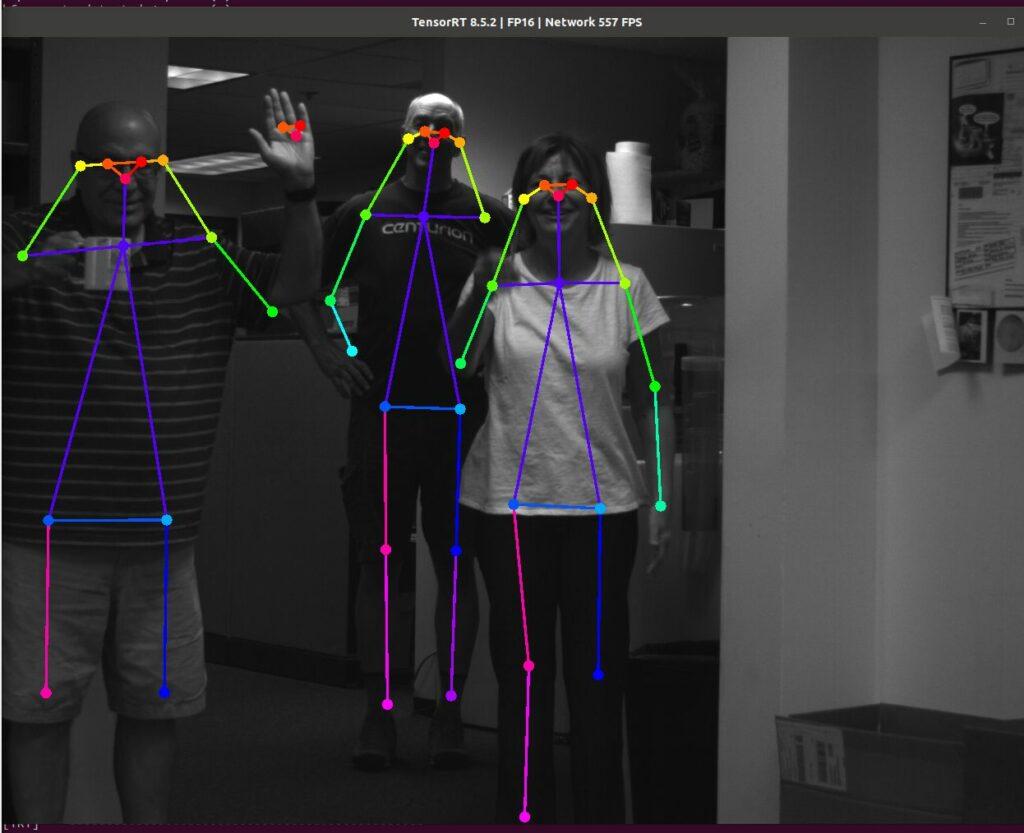
With a processing time of less than 2 milliseconds, the system is capable of acquiring 2560 x 1916 resolution images at 600 frames-per-second. Once output to the BitFlow Claxon CoF frame grabber, the Claxon’s Direct Memory Access transmits images directly into the Advantech computer’s GPU memory, reducing bottlenecks and freeing up the CPU to apply an NVIDIA pre-trained algorithm that searches each frame for people. If the algorithm locates a person, it calculates a crude skeleton location and overlays the displayed image with a “stick figure” representing the person’s bone structure.

The Advantech MIC-733-AO AI edge computer is embedded with an NVIDIA Jetson AGX Orin that natively supports the NVIDIA TensorRT ecosystem of APIs for deep learning inference. An optional PCIe x8 iModule is available for the MIC-733-AO to accommodate BitFlow CoaXPress and Camera Link frame grabbers. 

High throughput demands of the system required the use of the BitFlow Claxon CoF model. Designed to extend the benefits of CoaXPress over fiber optic cables, the Claxon Cof is a quad CXP-12 PCIe Gen 3 frame grabber that supports all QFSP+ compatible fiber cable assemblies. In addition to high speeds, fiber cables are immune to EMI and is capable of running lengths well over a kilometer, further than Ethernet’s 100 meter limitations.

Human pose estimation image
Real-time human pose system incorporating BitFlow CoF frame grabber, Advantech AI edge computer, and Optronis fiber camera, accelerated by NVIDIA TensorRT deep learning

BitFlow Announces Integration of NVIDIA Jetson AGX Orin Module with its Cyton and Claxon CoaXPress Frame Grabbers

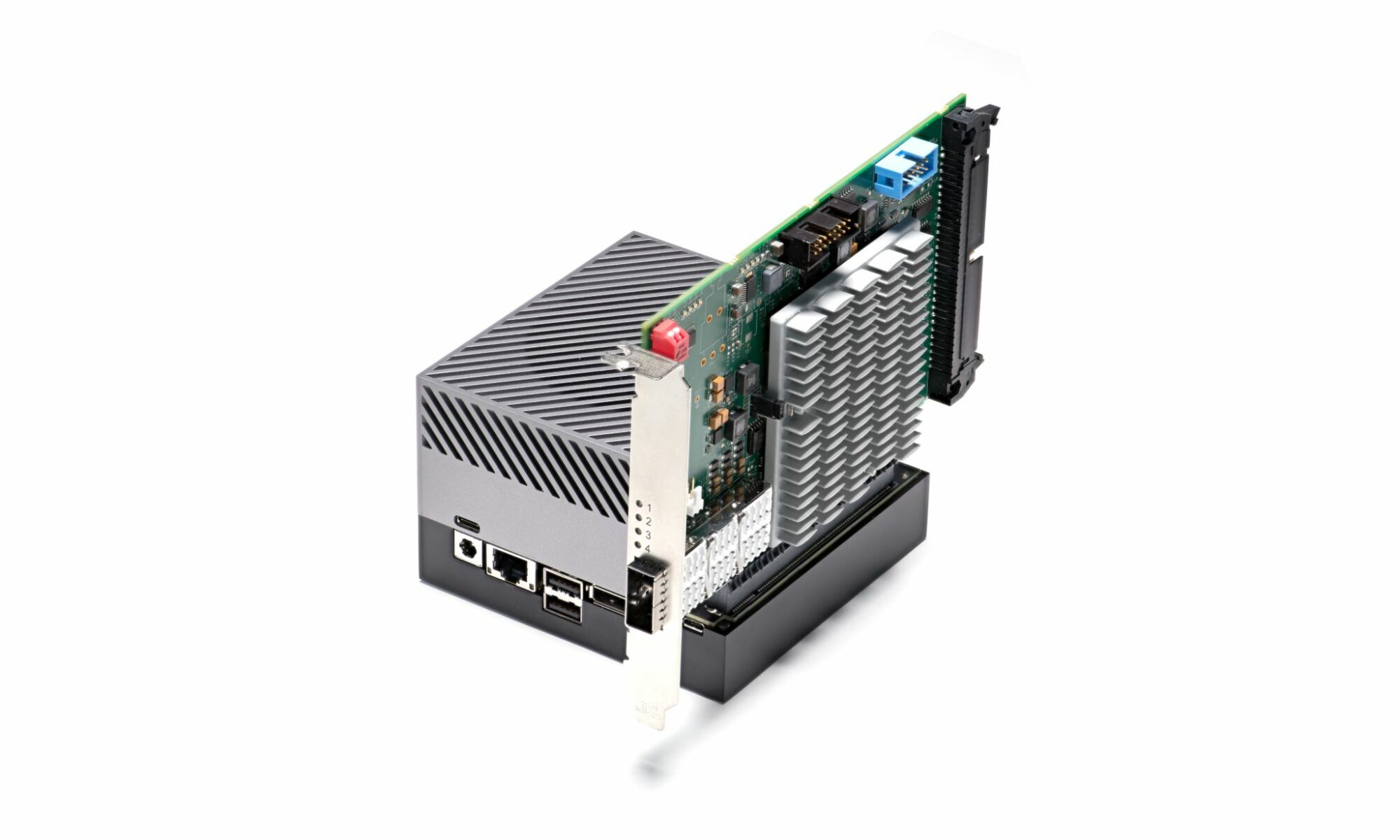
Orin with Claxon FXP4

WOBURN, MA, APRIL 9, 2024 — BitFlow announced today that it has successfully integrated the unprecedented computing power of the NVIDIA® Jetson AGX Orin module, which can perform 275 trillion operations per second (TOPS), with the lightning-fast data rates of its CoaXPress (CXP) frame grabbers.

When combined with the NVIDIA AGX Orin Developer Kit, this cost-effective platform empowers engineers to prototype complex machine vision and autonomous inspection applications, leveraging AI accelerated image processing while simultaneously supporting up to four CoaXPress (CXP) cameras and multiple concurrent AI application pipelines. Groundbreaking new applications are more easily developed that augment rule-based machine vision with image-based analysis, making it possible to move beyond “pass/fail” to tasks like image classification, image segmentation, and object detection.

Once proof-of-concept is established, a production model can move forward utilizing an Advantech AIR-030 AI Inference System Box featuring PCI Express x16 and based on the NVIDIA Jetson AGX Orin. As a result of this innovation, Time to Market and associated development costs are significantly reduced.

50GB DATA TRANSFER
BitFlow CXP frame grabbers connect directly to the Jetson AGX Orin via a built-in x16 PCIe slot. Image data may then be transferred at speeds up to 50GB per second from CXP cameras to the NVIDIA Ampere GPU architecture — much faster than what NVIDIA Jetson users are typically limited to using USB3 or GigE Vision cameras. BitFlow CXP frame grabbers DMA directly into the embedded GPU memory for image capture, pre-processing, and machine learning inference, shifting the load from the host computer to avoid CPU overhead.

Besides faster transfer speeds, the CoaXPress interface allows a single cable to carry all data, control, triggering, and up to 13W of power to connected cameras at lengths as far as 100 meters. CoaXPress eliminates the need for multiple cables and a local power supply, therefore giving the system integrator far more flexibility for their prototype designs.

Seamless integration between the NVIDIA Jetson AGX Orin and BitFlow frame grabbers is achieved through BitFlow’s Linux AArch64 SDK. With the SDK being universal, not only is BitFlow’s full line of CXP frame grabbers (Cyton and Claxon families) supported, but additionally the BitFlow Axion Camera Link family is an option for customers.

BitFlow Introduces SDK for NVIDIA Jetson AGX Xavier Development Kit

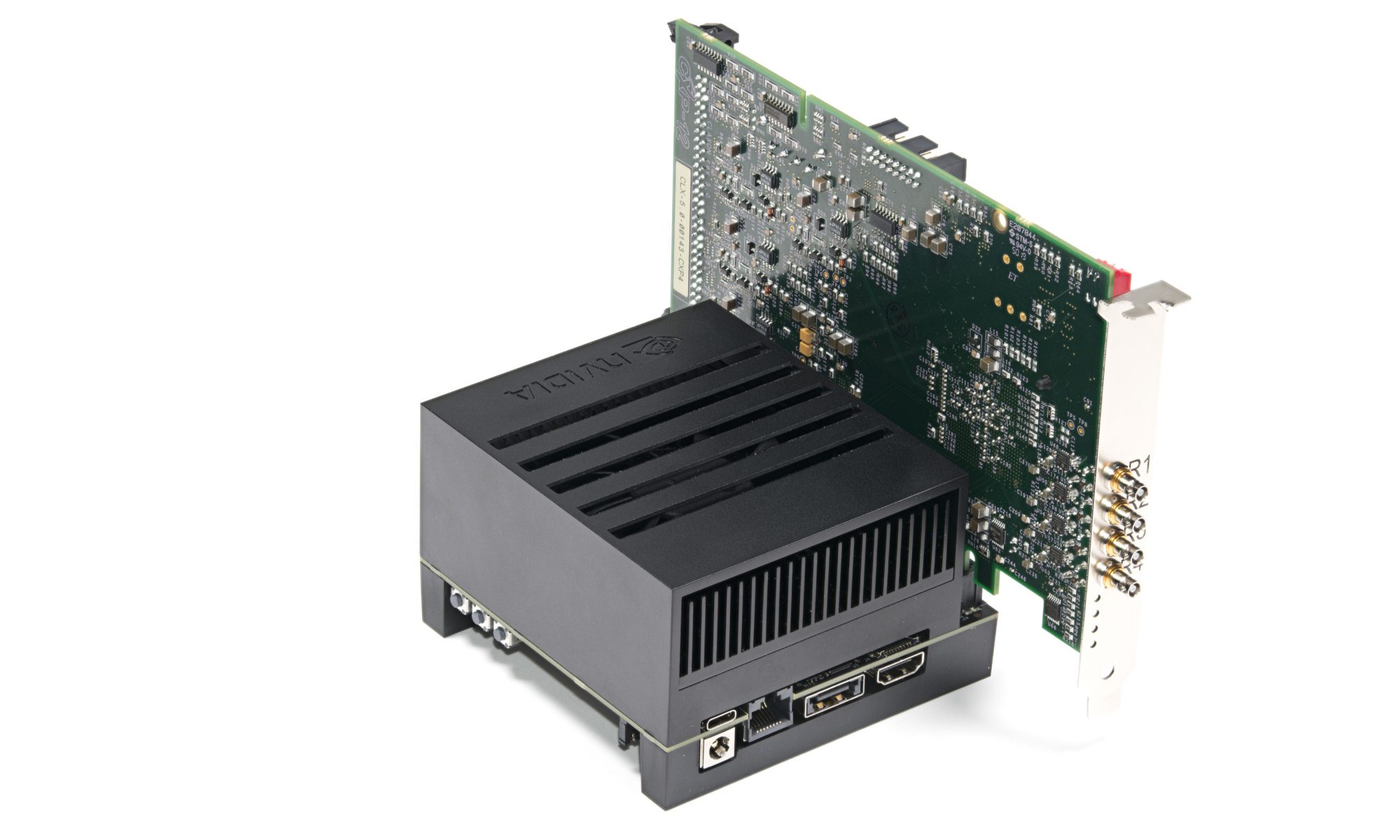
Jetson with a Claxon

BitFlow has released a Linux AArch64 (64-bit ARM) SDK that enables seamless integration of BitFlow frame grabbers with the NVIDIA Jetson AGX Xavier Development Kit. 

Donal Waide, Director of Sales for BitFlow, states, “Many of our customers are already using GPU solutions such as NVIDIA for image processing so adding this option to the already large BitFlow suite of adapters was a natural progression for the company. BitFlow has been supporting Linux for several years across a variety of flavors.”

Added Waide, “BitFlow was one of the first frame grabber companies to support NVIDIA’s GPUDirect for Video technology. BitFlow and NVIDIA have worked together for a number of years already.” 

With the advent of the new machine vision standard CXP 2.0 where data rates are now up to 50 Gb/S, customers are looking to process more and more data and in shorter timeframes. For this, a GPU can typically perform these tasks much more effectively than a CPU. Even with slower data rates such as Camera Link’s (up to 850 MB/S) the ability to quickly process more complex algorithms is equally important. 

The NVIDIA Jetson AGX Xavier is the first computer designed specifically for autonomous machines. It has six Engines onboard for accelerated sensors data processing and running autonomous machines software, and offers the performance and power efficiency for fully autonomous machines.